US payrolls rose 162,000 in August; unemployment held at 4.1%
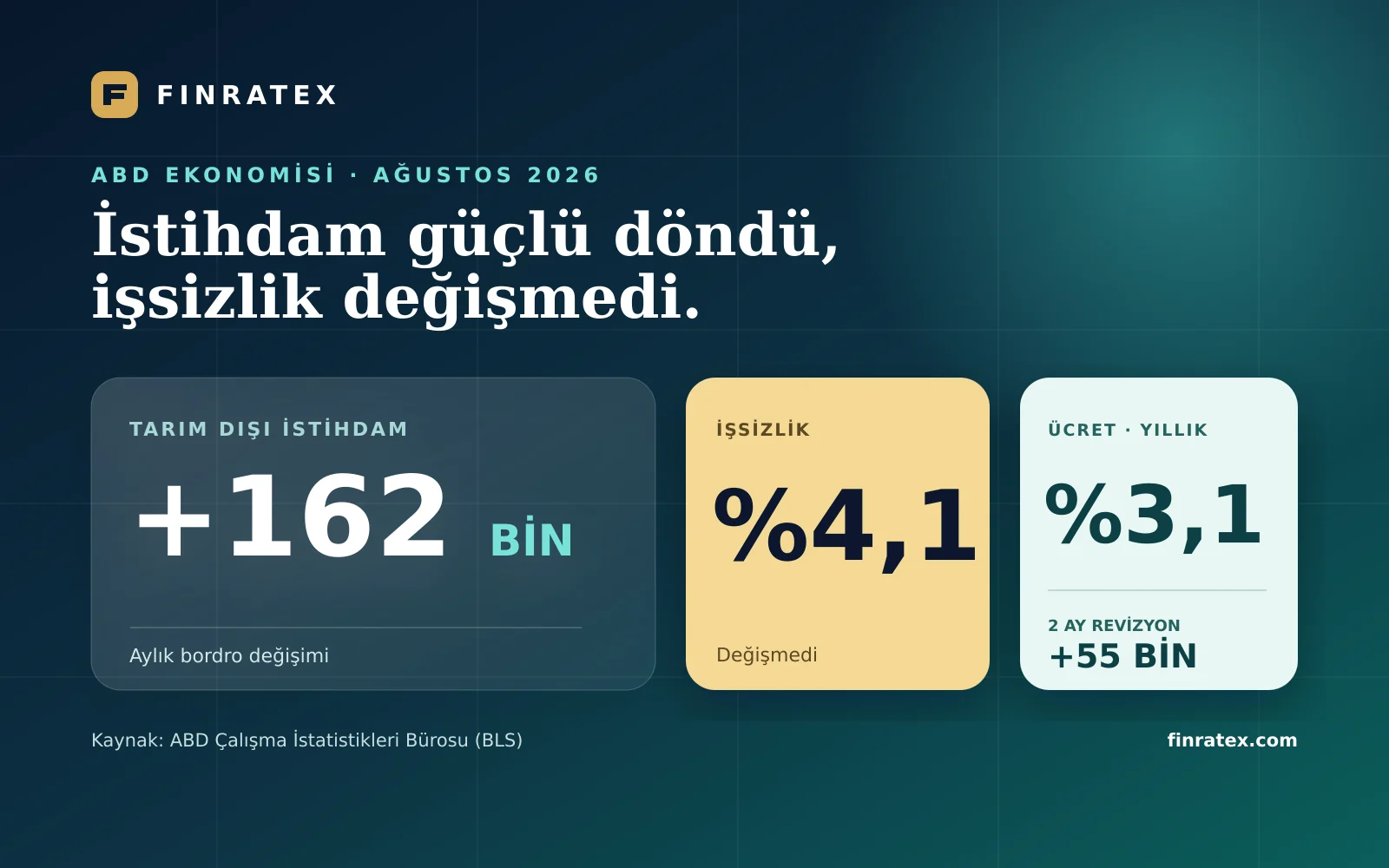
Payroll growth accelerated to 162,000 while unemployment was unchanged. Average hourly earnings rose 0.3% on the month and 3.1% from a year earlier; June and July were revised up by a combined 55,000.
In this article
Quick answer: what did the August jobs report say?
The US Bureau of Labor Statistics reported that nonfarm payroll employment rose by 162,000 in August 2026. The unemployment rate was 4.1% and 7.0 million people were unemployed. Labor-force participation edged up to 61.6%, while the number working part time for economic reasons fell by 414,000 to 4.4 million.
Which sectors drove the employment gain?
Food services added 59,000 jobs, local-government education added 42,000 and manufacturing added 16,000. Health care gained 13,000 and construction 22,000. Information employment fell by 23,000. The headline gain was therefore uneven across industries.
What did wages and hours show?
Average hourly earnings for private-sector employees rose by 10 cents, or 0.3%, to $37.75 in August. Earnings were 3.1% higher than a year earlier. The average private-sector workweek held at 34.4 hours. Wages and hours help show the strength of labor demand and income alongside the payroll count.
Why do the revisions matter?
BLS revised June payroll growth from 11,000 to 31,000 and July from a loss of 23,000 to a gain of 21,000. The combined level for those two months was 55,000 higher than previously reported. Monthly payroll estimates change as more establishment responses arrive, making the direction of revisions important alongside the latest headline.
The Fed, dollar, bonds and gold connection
Stronger employment and wage growth can, all else equal, strengthen the view that the economy is withstanding higher interest rates. The market effect still depends on inflation, Treasury yields and Federal Reserve communication. The Fed meets on September 15–16; this report is one major labor-market input before the decision, but it does not determine the policy outcome by itself.
When is the next jobs report?
BLS is scheduled to release the September 2026 Employment Situation on Friday, October 2, 2026 at 8:30 a.m. ET. The official BLS release calendar should be checked for any schedule changes.
 Gold, energy and commodities
 Gold, energy and commodities
 Gold, energy and commodities