Türkiye bought 3 tonnes of gold in August—why is it still a net seller of 82 tonnes in 2026?
World Gold Council data show Türkiye returning to purchases in August after three months of sales. The move has not erased the 82-tonne net reduction recorded over the first eight months of 2026.
In this article

The direction of Türkiye's official gold holdings turned positive in August. The World Gold Council says the central bank bought a net 3 tonnes. Yet the January–August total remains a net sale of 82 tonnes, so one positive month is not enough to conclude that a sustained accumulation cycle has begun.
Three critical conclusions
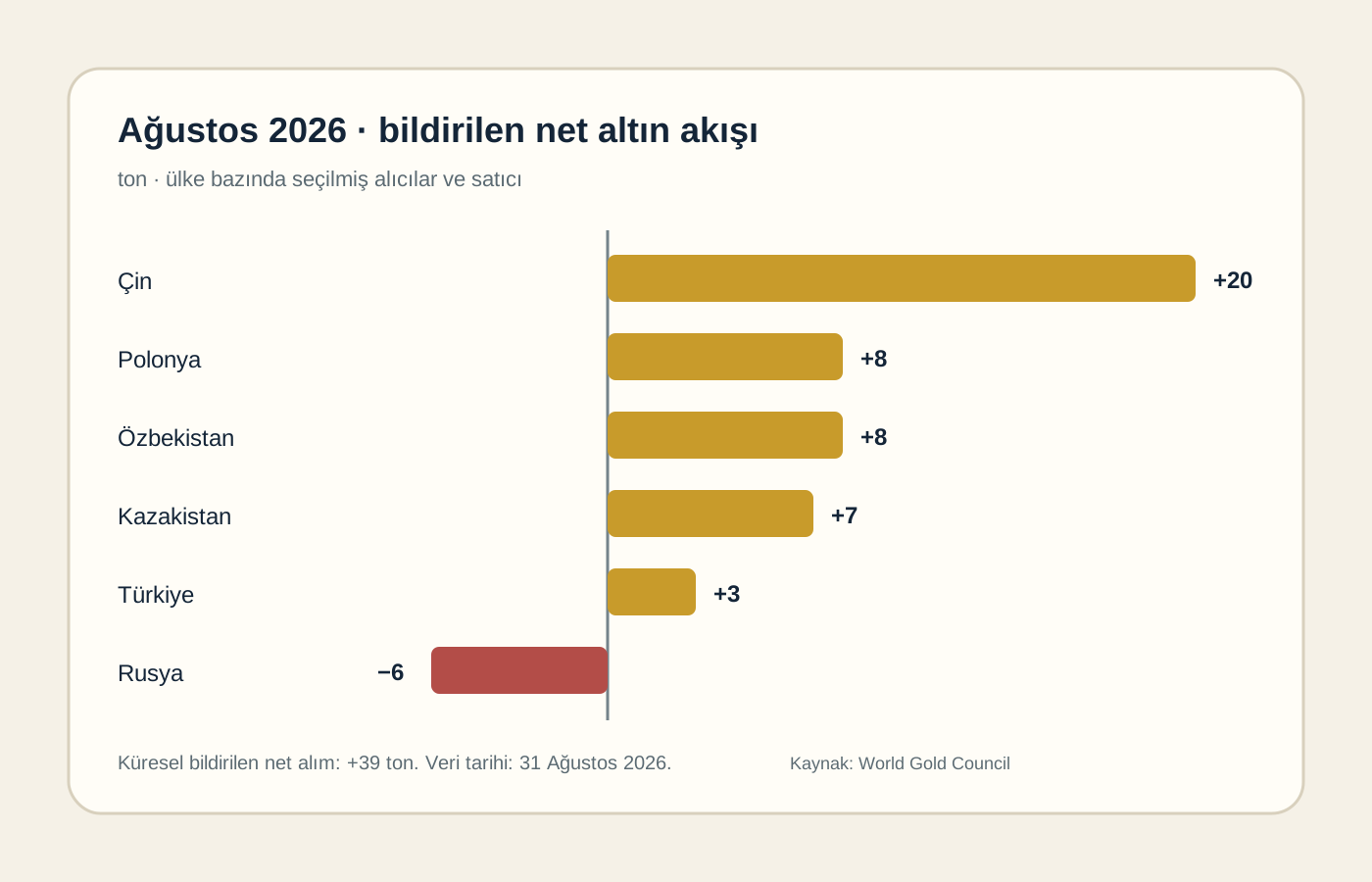
- Reported global central-bank net buying reached 39 tonnes in August and 170 tonnes over the first eight months. China led the month with 20 tonnes; Poland and Uzbekistan bought 8 tonnes each.
- Türkiye bought 3 tonnes in August, ending three consecutive months of net sales. Earlier reductions still leave the 2026 January–August balance at a net sale of 82 tonnes.
- A tonnage flow measures the physical quantity change. The dollar value in CBRT reserve tables may move in a different direction—or by a different magnitude—because of the gold price, valuation exchange rates and reserve coverage.
Reported gold flows in August and year to date
The matrix shows official net quantity changes, not price performance.
| Central bank | August 2026 | 2026 year to date | Reading |
|---|---|---|---|
| Global total | +39t | +170t | Reported purchases exceeded sales |
| China | +20t | +80t | Twenty-second consecutive buying month |
| Poland | +8t | +98t | Largest reported net buyer in 2026 |
| Uzbekistan | +8t | about +50t | Very high gold share of reserves |
| Türkiye | +3t | −82t | One positive month does not erase the annual sale |
| Russia | −6t | −56t | Largest reported August seller |
What does the August release show?
The World Gold Council's country-level compilation, published on October 6, puts reported central-bank net buying at 39 tonnes in August. Türkiye returned to the positive side with a 3-tonne purchase, the first buying month after three consecutive months of net sales. The data end on August 31; September and October transactions are not included.
How can +3 tonnes and −82 tonnes both be correct?
The numbers cover different periods. Plus 3 tonnes is the net change in August alone; minus 82 tonnes is the cumulative balance from January through the end of August. Sales earlier in the year still dominate the total, so the August purchase closed only a small part of the gap. One positive month does not by itself establish a permanent policy change.
Where did global buying come from?
China bought 20 tonnes in August, Poland and Uzbekistan 8 tonnes each, and Kazakhstan 7 tonnes. China extended its buying run to 22 months, while Poland remained the largest reported 2026 net buyer at 98 tonnes. Russia sold 6 tonnes. The global headline is therefore a net result across buyers and sellers, not evidence that every central bank moved in the same direction.
Tonnage and dollar value are different measures
Tonnage tracks the net change in physical gold holdings. The dollar value in the CBRT's weekly reserve tables also moves with the international gold price, the valuation exchange rate, the reporting date and the scope of reserves. Dollar value can therefore rise while tonnage falls, or vice versa. Treating a valuation gain as a new purchase creates a category error.
What does 39 tonnes mean for the gold price?
Central-bank demand is a structural component because reserve decisions tend to have a longer horizon than tactical trading. But one month of 39-tonne net buying does not guarantee that gold rises that day or month. Real yields, the dollar, ETF flows, futures positioning, physical demand and geopolitics act at the same time. The World Gold Council also cautions that seasonal differences vary widely across years and that stronger causal claims require more analysis.
What would confirm a renewed Türkiye buying cycle?
Several consecutive months of positive tonnage would make it easier to distinguish a lasting reserve preference from a one-off adjustment. Renewed sales could instead point to liquidity management or a country-specific reserve need. Without an official explanation, neither path supports a definitive causal story; the observable fact is the reported quantity change.
MY MONEY AND PORTFOLIO · Is this a buy signal?
No. A central bank's reserve objective is different from an individual's horizon, currency exposure, liquidity needs and costs. Gram-gold outcomes also depend on the ounce price, USD/TRY, purity, bid-ask spread, storage or fund fees and tax conditions. The August release helps explain long-run demand structure; it does not provide a timing signal or price target.
MY BUSINESS · Why can the reserve's dollar value mislead?
A gold-exposed company should not treat the dollar value of central-bank reserves as a physical-demand proxy. The value can rise because the price moved, whereas tonnage describes quantity. An importer or manufacturer should instead specify the ounce benchmark, FX timestamp, purity, product premium, financing cost and valuation clauses that actually determine cash flow.
Calculation notes
Country flows come from the World Gold Council's August 31, 2026 compilation based on IMF and respective central-bank reports. A limited set of statistics is used for review and commentary with attribution to the WGC. The CBRT page was used to verify the reserve definition and current publication structure. Unreported transactions, later revisions and the reasons for individual trades are unknown and were not estimated. This is not investment advice.
 Türkiye economy
 Gold, energy and commodities
 Gold, energy and commodities