Türkiye’s October rent cap is 31.49%: TRY 20,000 becomes TRY 26,298
October’s rent-renewal cap is 31.49%. We calculate a TRY 20,000 example and explain renewal dates, residential and business leases, and the five-year rule.
In this article

Three distinctions
- 31.49% is the twelve-month average change, not monthly or year-on-year CPI.
- The rate belongs to the relevant renewal period, not an automatic October increase for every tenant.
- A ceiling is not a compulsory increase. Five-year rent assessments and foreign-currency leases have separate rules.
What happens if the full cap is applied?
Assumes the full 31.49% rise; excludes charges and taxes.
| Current rent | Monthly increase | New rent | Extra over 12 months |
|---|---|---|---|
| TRY 10,000 | TRY 3,149 | TRY 13,149 | TRY 37,788 |
| TRY 20,000 | TRY 6,298 | TRY 26,298 | TRY 75,576 |
| TRY 25,000 | TRY 7,872.50 | TRY 32,872.50 | TRY 94,470 |
| TRY 30,000 | TRY 9,447 | TRY 39,447 | TRY 113,364 |
What is October’s rent-renewal rate?
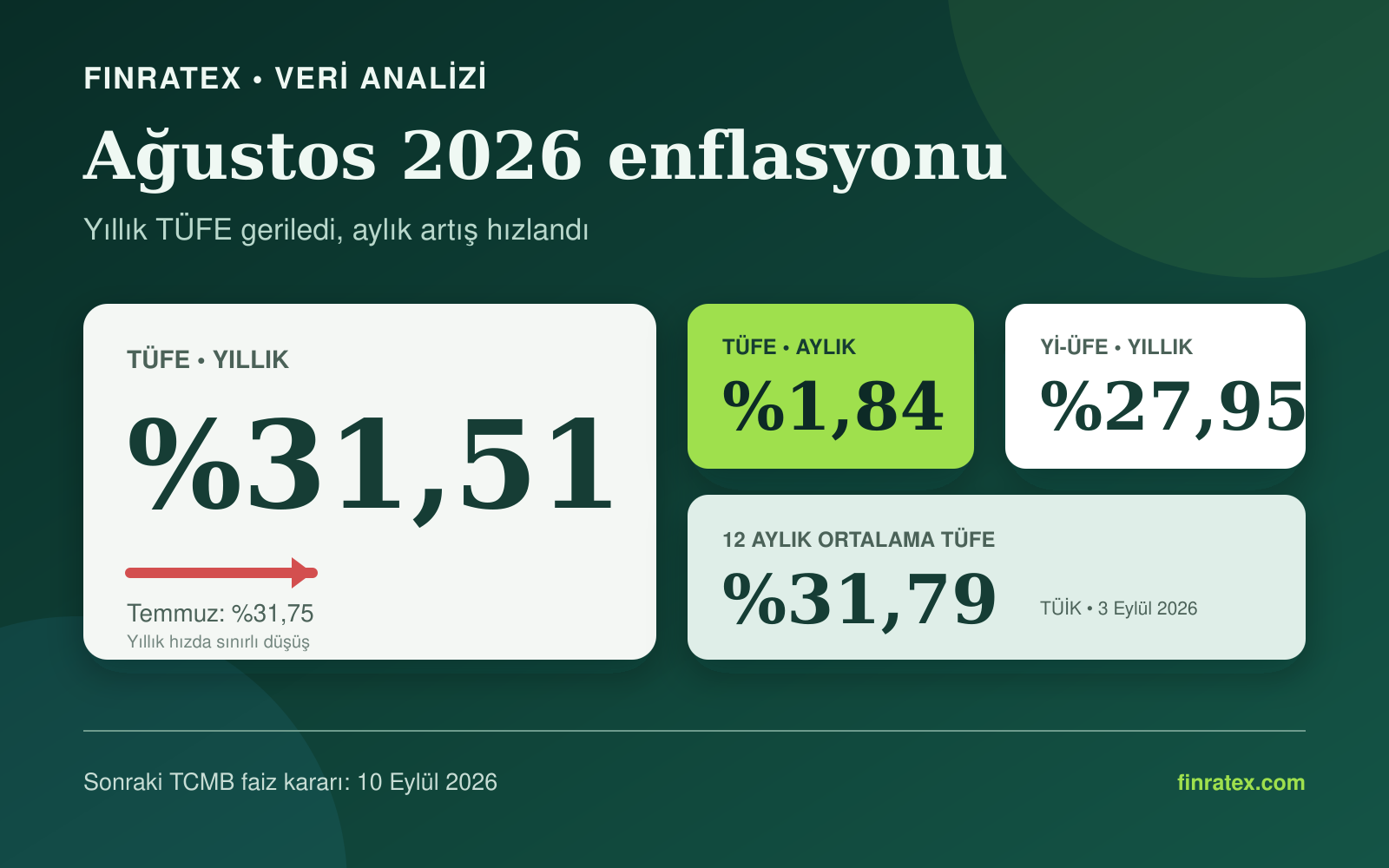
The twelve-month average CPI change used for ordinary Turkish-lira residential and roofed-business lease renewals in October 2026 is 31.49%. September renewals used 31.79%, so the rate fell by 0.30 percentage point. The Justice Ministry’s İşyurtları institution announced 31.49% for its commercial units on October 5; the BTSO September price table records the same CPI average.
When does it apply?
The relevant date is the lease period’s renewal, not simply the day the news appears. For example, an ordinary TRY lease renewing on October 15 uses the indicator applicable to October renewal. A lease renewing in another month does not receive an additional October increase solely because new CPI data were released. Nor is the indicator a universal price list limiting every asking rent offered to a new tenant in the same way.
Homes and shops: A common rule, different total costs
Article 344 of the Turkish Code of Obligations limits renewal-increase agreements by the twelve-month average CPI change. This frames ordinary TRY renewals for residential and roofed-business leases. A shop’s total cash outflow may also include maintenance charges, shared costs, applicable VAT, withholding and net-versus-gross contract terms. The table isolates the percentage change in rent; it is not a tax-inclusive invoice or a complete payment obligation.
A cap is not a mandatory increase
31.49% is an upper limit, not an automatic requirement to raise every rent by that amount. Valid contract terms and the parties’ agreement matter. If a valid applicable increase is 20%, TRY 20,000 becomes TRY 24,000. The existence of a higher ceiling alone does not create an obligation to pay TRY 26,298. Where no increase agreement exists, the law contains a separate provision on judicial determination.
The monthly and twelve-month effect on TRY 20,000
Assuming the full ceiling applies, TRY 20,000 × 0.3149 gives a TRY 6,298 increase, making monthly rent TRY 26,298. Twelve equal payments total TRY 315,576, an additional TRY 75,576 compared with twelve payments at the old rent. This covers a twelve-month lease period, not necessarily a calendar year. If renewal occurs partway through 2026, the calendar-year addition depends on remaining payments. Shared charges and other expenses are excluded.
Why a lower rate does not make rent cheaper
A lower increase rate produces a lower new rent than the previous month’s ceiling would produce, rather than reducing the existing rent. On the same TRY 20,000 base, 31.79% gives TRY 26,358 while 31.49% gives TRY 26,298. The difference is TRY 60 monthly or TRY 720 over twelve payments. This compares two rates on an identical base; it does not automatically cut a lease renewed in September by TRY 60 in October.
Why neither monthly nor annual CPI is the rent figure
September monthly CPI rose 1.84%, and the year-on-year rate was 29.73%. The rent-renewal indicator is instead the twelve-month average change of 31.49%. The measures use different periods and meanings. Substituting 29.73% or 1.84% produces a different rent. Salary and pension adjustments also use periods and rules distinct from rent renewal.
Do leases beyond five years fit this simple table?
Not necessarily. For leases longer than five years or renewed after five years, and at subsequent five-year intervals, the law provides for a judge to consider the CPI average, the property’s condition and comparable rents when determining a new rent. This does not authorize an unlimited unilateral increase by the landlord. Foreign-currency leases have separate provisions. A simple multiplier cannot determine a rent-assessment dispute or the legal position of a special contract.
What it means for households, landlords and small businesses
Tenants should read the renewal month alongside the contract’s increase clause and budget for the applicable new rent plus shared expenses. A landlord’s rent increase is a gross-income change before maintenance, tax and vacancy costs. For a small business, an extra TRY 6,298 each month adds to operating expenses if sales are unchanged; its profit impact depends on other costs. The renewal ceiling alone cannot establish a property’s sale value or investment return.
Calculation notes
New rent = current monthly rent × 1.3149; increase = current rent × 0.3149. Examples assume ordinary October TRY renewals and application of the full ceiling. Annual totals mean twelve equal payments. A lower valid contract rate, agreement, judicial decision, foreign-currency term, net/gross definition, tax or shared costs can change individual outcomes. The table is neither a judicial rent assessment nor investment advice.
 TÜRKİYE ECONOMY · INFLATION
 US MANUFACTURING · ISM
 US ECONOMY · EMPLOYMENT