Türkiye's economy grew 2.3% in Q2 2026: what drove the expansion?
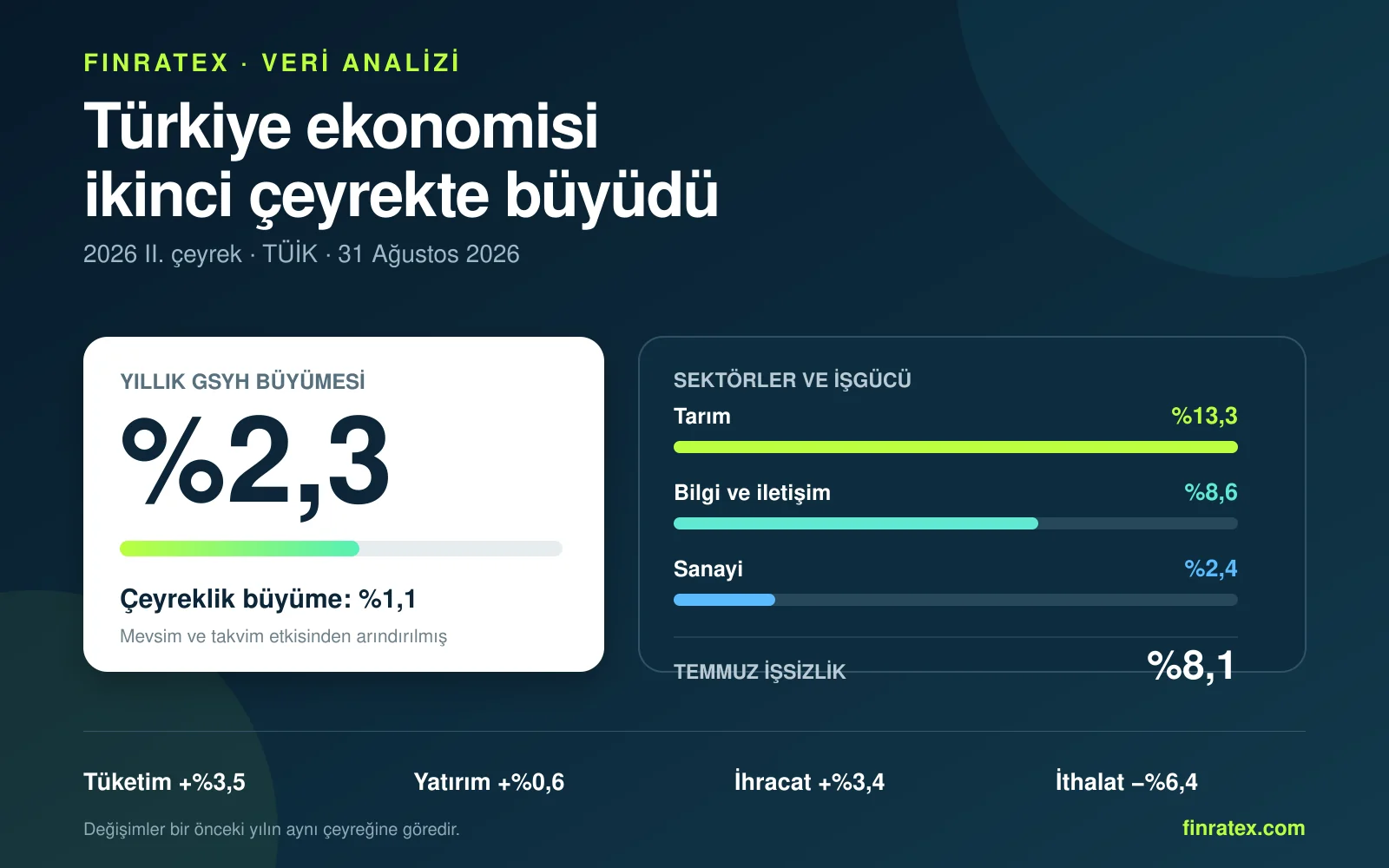
GDP rose 2.3% from a year earlier and 1.1% from the previous quarter. Agriculture and information services led the sector table, while July unemployment increased to 8.1%. The mix matters as much as the headline rate.
In this article
Quick answer: how fast did Türkiye's economy grow?
Türkiye's economy expanded 2.3% in the second quarter of 2026 from a year earlier. Seasonally and calendar-adjusted GDP increased 1.1% from the previous quarter. At current prices, second-quarter GDP was TRY 19.870 trillion, or $438.347 billion. The annual rate compares activity with last year, while the quarterly rate captures the latest three-month momentum, so the two should be read together.
Which sectors drove growth?
Agriculture, forestry and fishing recorded the strongest annual increase in value added at 13.3%. Information and communication grew 8.6%, public administration, education and health 4.0%, industry 2.4%, and finance and insurance 2.1%. Trade, transportation, accommodation and food services grew only 0.5%, while construction value added fell 1.9%. The mix shows that the 2.3% headline was not shared evenly across the economy.
What did consumption, investment and trade show?
Resident household consumption rose 3.5% year on year and gross fixed capital formation increased 0.6%, while government final consumption declined 1.8%. Exports of goods and services grew 3.4% as imports fell 6.4%. The opposite direction of exports and imports indicates support from net external demand, while the modest investment gain is a more cautious signal for the strength of capacity expansion.
Why July unemployment belongs in the same discussion
TurkStat's same-day July release showed seasonally adjusted unemployment rising 0.5 percentage point to 8.1%. Employment fell by 388,000 to 32.362 million and the employment rate declined to 48.3%. The broader labor-underutilization rate increased 1.8 points to 30.6%. GDP and monthly labor data do not cover identical periods, but reading them together helps test how broadly output growth is reaching the labor market.
What it could mean for Turkish equities, the lira and rates
Sector divergence can affect listed companies through different channels. Stronger agricultural and industrial value added may support the operating backdrop for some producers, while weaker construction and limited investment growth call for company-level selectivity. GDP alone does not determine the lira or bond yields; the September 3 inflation release and September 10 CBRT statement are more direct pricing inputs. Labor-market softening also matters for domestic demand and wage pressure.
What to watch next
August inflation on September 3 is the next major release, followed by the CBRT decision on September 10. Industrial production, retail sales and the next labor-market report will help show whether second-quarter momentum carried into Q3. One 2.3% GDP reading cannot establish the direction of the currency, rates or equities; the composition and follow-up data matter. This article is not investment advice.
Related analysis
All news →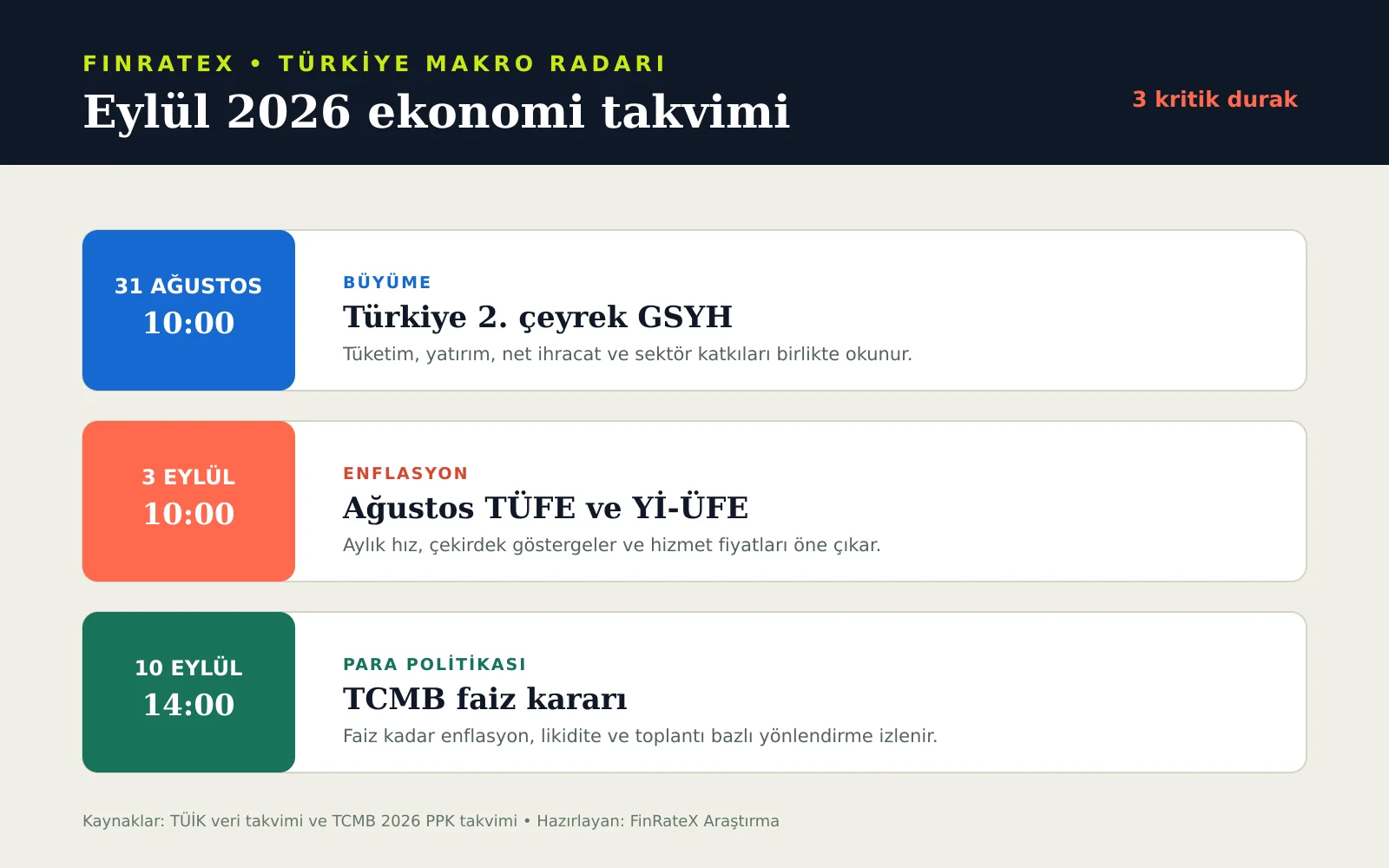 Money and banking
Türkiye’s September 2026 economic calendar: GDP, inflation and the CBRT rate decision
 Money and banking
Türkiye expands BSMV exemption on rediscount loans: what changes for exporters?
 Gold, energy and commodities