KOSGEB’s TRY 2.25 million support: what an 80% rate means for a business budget
KOSGEB’s October 12–31 call offers repayable support up to TRY 2.25 million. We explain the 80% rate, a TRY 100,000 cost and the business’s funding need.
In this article

The main calculation in KOSGEB’s new call is how to place the ceiling inside a business budget. An 80% support rate corresponds to TRY 80,000 of an approved TRY 100,000 cost; the remaining TRY 20,000 and costs outside the support must still fit the funding plan. This component is repayable: the support changes the financing structure rather than eliminating the debt.
Three critical developments
- Applications for the third 2026 round run October 12–31. The standard ceiling is TRY 2.25 million, rising by TRY 250,000 to TRY 2.5 million for specified entrepreneur groups.
- Business Development Support covers 80% and is repayable. Repayment begins 12 months after the 24-month programme ends; KOSGEB charges no interest or commission on this repayment.
- Separate financing-cost support covers 50% of interest/profit-share costs on a bank loan up to TRY 1 million for eligible female or young entrepreneurs. It cannot be combined with Business Development Support.
Which support route carries which funding burden?
Ceilings are not automatic awards. Application, cost approval and assessment conditions apply separately.
| Route | Ceiling and rate | Duration | Business budget implication |
|---|---|---|---|
| Business development | TRY 2.25 million; 80% | 24-month project | Remaining 20% of approved costs, followed by repayment |
| Development with extra ceiling | +TRY 250,000; TRY 2.5 million total | Same project period | Young, female, disabled, veteran or first-degree relative of a martyr condition |
| Interest/profit-share support | TRY 1 million loan; 50% of financing cost | Up to 36-month term | Loan principal and uncovered financing costs remain payable |
| Business establishment | Platform and conditional performance costs | 24-month support | Non-repayable; distinct from the development ceiling |
An application window is not a payment schedule
KOSGEB’s October 12 announcement sets the application period. October 31 is the final application date, not the date funds enter a business account. Project approval and cash receipt are different stages. A supplier payment should not be scheduled solely around the call date before the support payment date is confirmed.
Splitting a TRY 100,000 cost
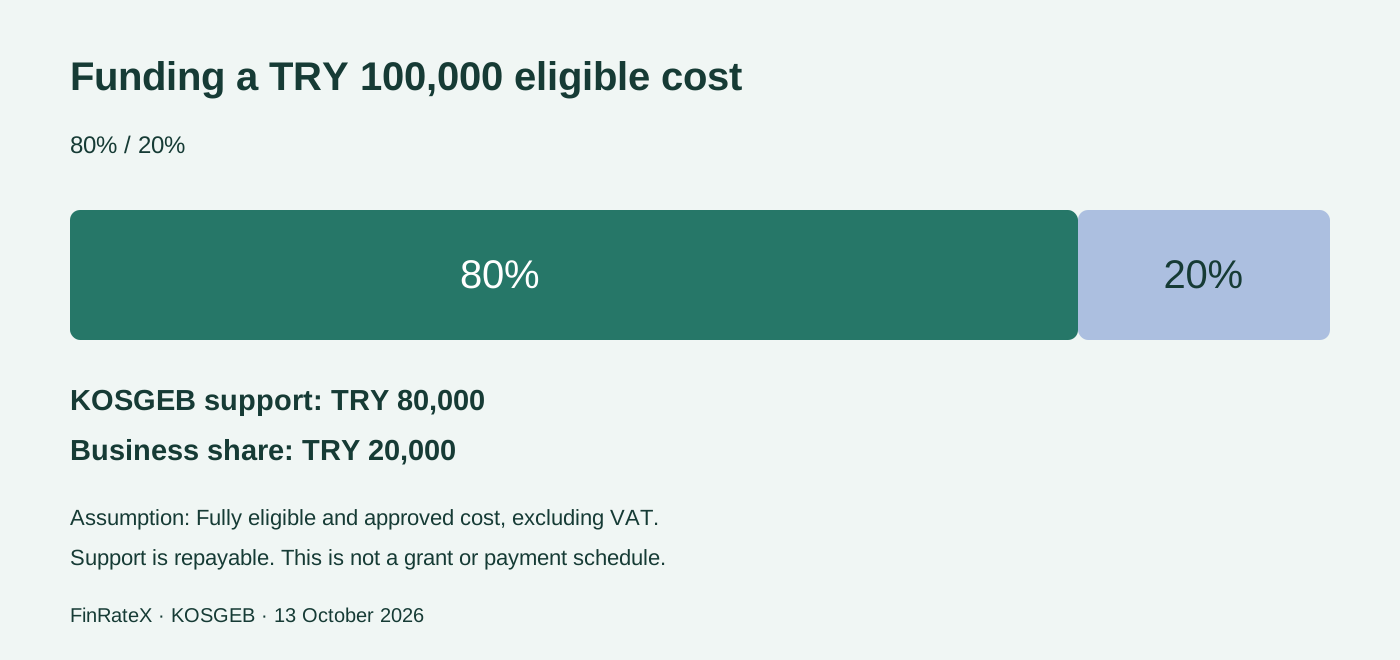
Assume a TRY 100,000 expense, excluding VAT, is fully eligible and approved. At 80%, support is TRY 80,000 and the business cost share is TRY 20,000. Under the same assumptions, reaching TRY 2.25 million of standard support requires TRY 2,812,500 in eligible costs and a TRY 562,500 business share. For an eligible enhanced ceiling, TRY 2.5 million corresponds to TRY 3,125,000 in costs and a TRY 625,000 business share. These are FinRateX’s simple percentage calculations, not estimates of an approved budget or payment.
A 20% share is not the peak cash requirement
A budget’s funding gap is more than the difference between costs and support. If the interval between invoice payment and support receipt widens, temporary cash needs may rise above that gap. In a manufacturing investment, stock and wages can be paid before sales are collected. An entrepreneur should therefore divide the budget into months and track opening cash, committed payments and receipts together. A delayed-support scenario tests whether the business can keep its order on track.
Half the interest cost is not half the loan
Suppose the bank-finance route produces TRY 100,000 of approved interest/profit-share costs. A 50% cost subsidy would be TRY 50,000; the remaining TRY 50,000 and loan principal are still business obligations. This is not a current interest rate, bank offer or assumption that every charge is covered. Comparing total loan costs is misleading unless principal, maturity and repayment profiles match. The interest-free condition for KOSGEB’s direct repayable support does not make the separate bank loan interest-free.
MY BUSINESS · Eligibility comes before the investment calculation
The programme page lists manufacturing, telecommunications, software, information services and R&D for business development. The general company-age limit is three years, with an exemption for holders of a technology-entrepreneurship badge. Active KOSGEB registration and a current Business Declaration are required. A large headline ceiling does not make another company’s eligibility transferable to yours. Activity code, planned capacity and expected customer revenue should form a coherent project.
MY MONEY AND PORTFOLIO · Equity and debt are separate calculations
A shareholder putting personal savings into a company should distinguish covering the business share from meeting later repayments. Test lower collections and delayed support alongside an optimistic sales plan. A support ceiling does not establish investment profitability or, on its own, a valuation outcome for a BIST company. The business question is whether the investment can generate sales and productivity without squeezing working capital.
Calculation notes
Calculations assume full approval of eligible costs at an 80% rate. VAT, withholding tax, bank fees, collateral/guarantee costs and other taxes are excluded; this does not mean they disappear or are automatically supported. Tax treatment depends on the transaction. KOSGEB application and payment documents and the bank contract determine final amounts. Development support and financing-cost support were not added together. Approval, payment dates, instalment allocation and interest rates were not estimated. This analysis is not investment advice.
 Türkiye economy
 Money and banking
 Global economy