Türkiye’s economic confidence crossed 100: what the number does—and does not—signal
TurkStat’s August release showed economic confidence rising from 99.8 to 100.6. Crossing the threshold is constructive, but the components show that the recovery is not yet balanced across sectors.
In this article
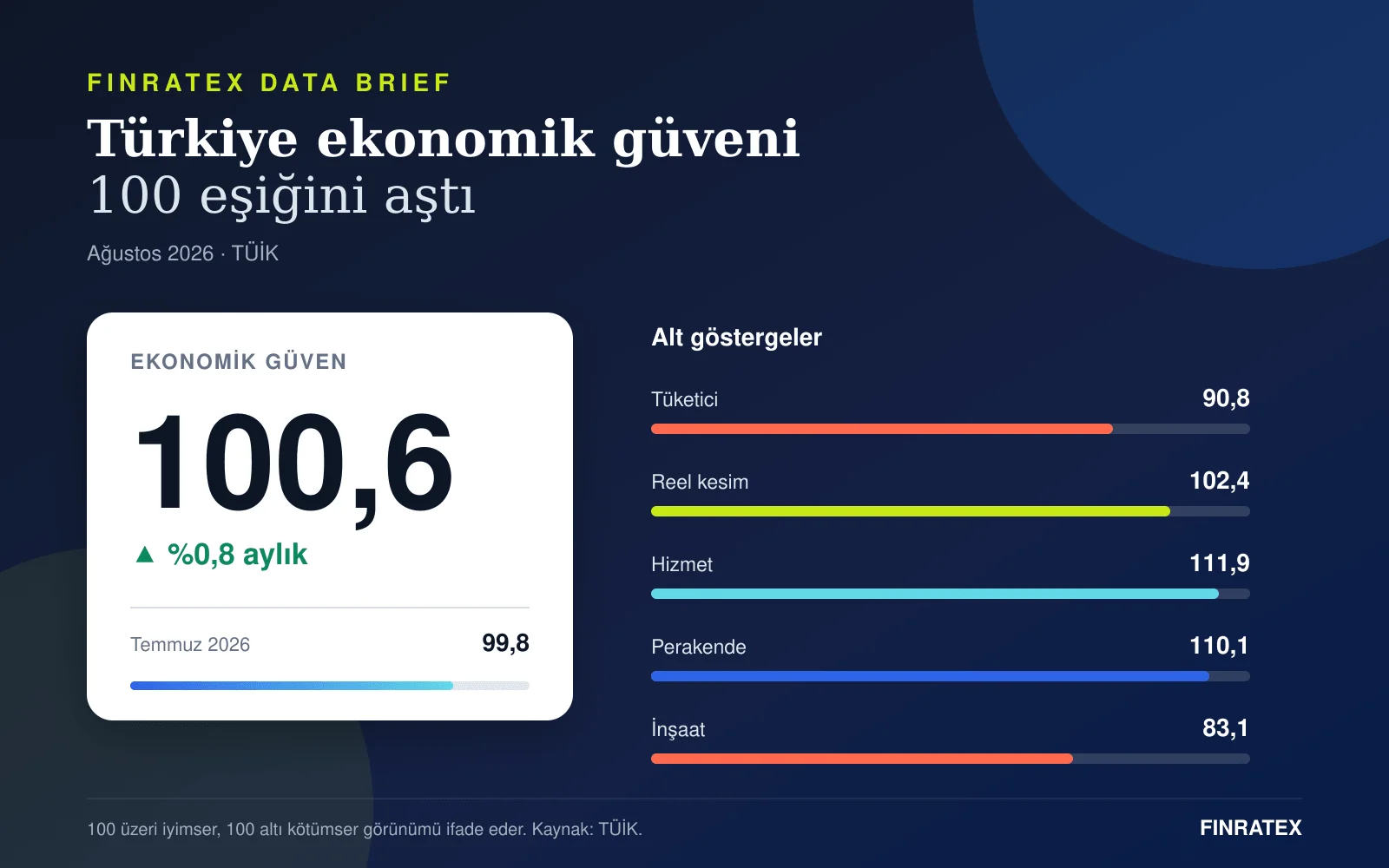
The headline: 100.6
Türkiye’s economic confidence index rose 0.8% month on month, from 99.8 in July to 100.6 in August, moving the composite gauge back above the 100 threshold. The strongest positive contributions came from a 1.0% increase in consumer confidence and a 1.2% rise in real-sector confidence.
Why the recovery is not balanced
Real-sector confidence climbed to 102.4, while consumer confidence remained at 90.8. Services and retail confidence stayed above 100 at 111.9 and 110.1, but fell 0.1% and 0.8%, respectively. Construction confidence declined 0.4% to 83.1. The headline is therefore in optimistic territory, but caution among households and construction firms has not disappeared.
The first message for Turkish equities
Improving real-sector sentiment can be a relatively constructive signal for industrial companies’ production and order expectations. One confidence reading, however, does not determine earnings or share prices. The composition of domestic demand, financing costs, export markets and reported cash flows may be more important for individual companies over the same period.
What it means for the lira and bonds
Higher confidence suggests activity is not deteriorating sharply, but it is not a stand-alone monetary-policy signal for the currency or bond market. Inflation, reserves, credit conditions, the fiscal outlook and global yields have a more direct bearing on Turkish assets. Several months above 100, confirmed by hard activity data, would provide more meaningful support to risk perceptions.
Why 100 is not enough on its own
The economic confidence index is a survey-based composite leading indicator, not a measure of realized output, sales or profits. When components move in different directions, the headline can overstate the breadth of improvement. The 100.6 reading is worth monitoring as a possible turning point, but it does not by itself imply faster growth or an equity rally.
What investors should watch next
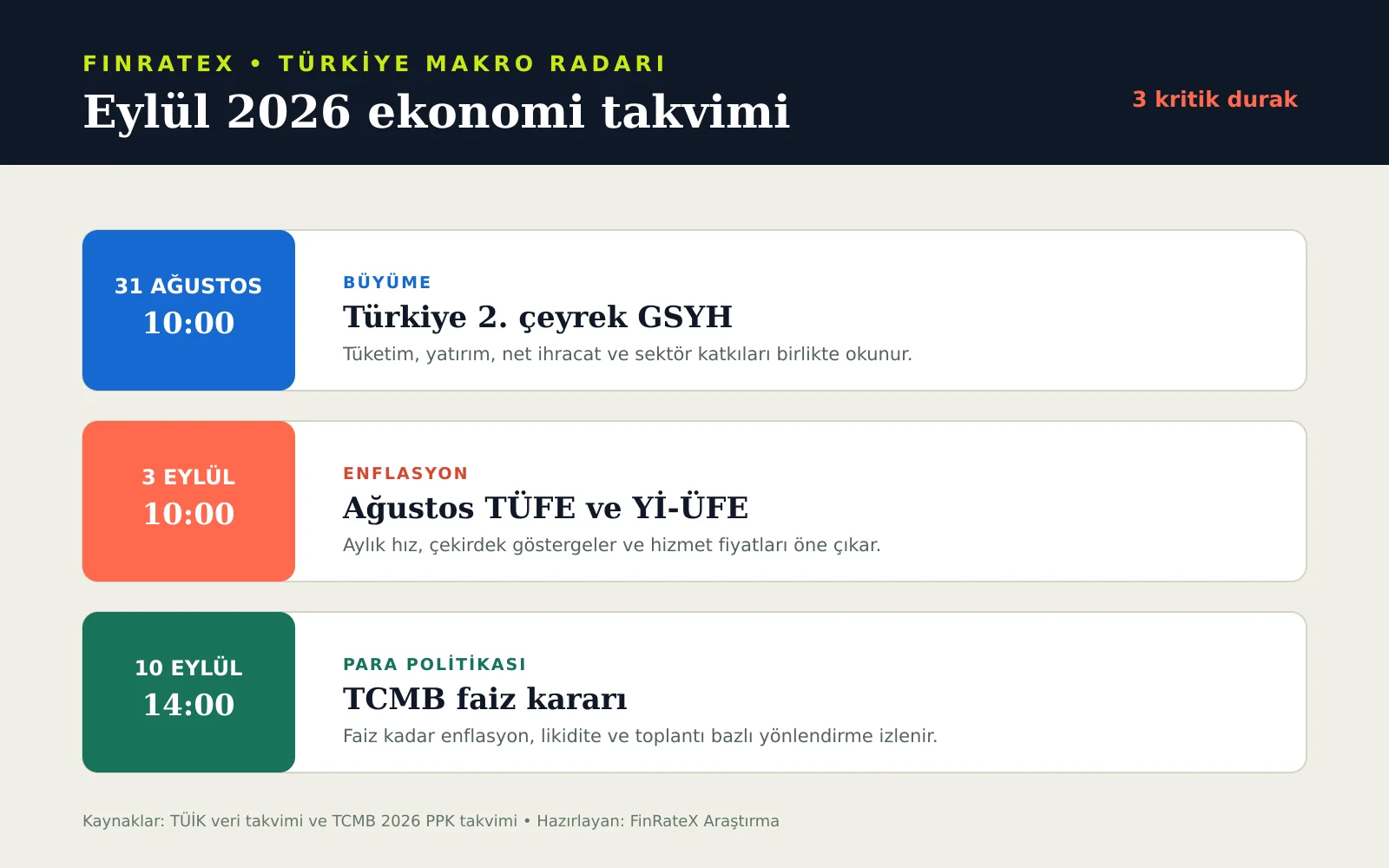
The next inflation report, the Central Bank of the Republic of Türkiye’s September 10 rate decision, whether consumer confidence moves closer to 100, whether declines in retail and construction confidence persist, and domestic-demand commentary in company results will be the key follow-ups. Broader confirmation would offer a clearer test of whether August’s improvement can last. This article is not investment advice.
 Global economy
 Türkiye economy
 Money and banking